Skip to content

Eldercare activity supplies delivery solution

Prepare supplies before activities.Replenish during sessions and collect afterwards.

Deliver ahead of activities, replenish during sessions and collect permitted items afterwards, supporting social workers and caregivers.

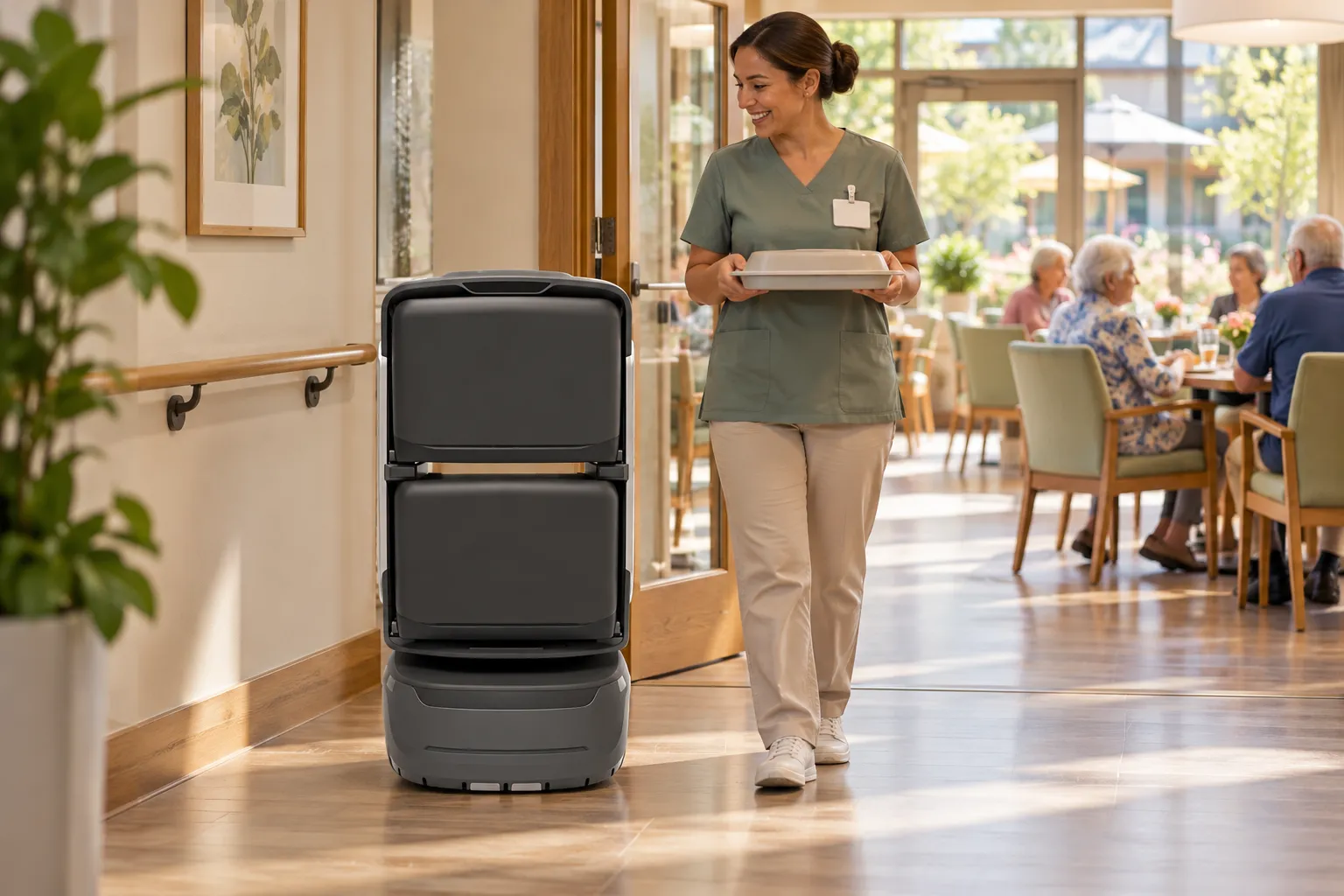
Illustrative robot service scene
  1. Request

    Users

    Select items, destination and required time.

  2. Deliver

    Robot

    Follow configured routes and access rules.

  3. Handover

    Recipients

    Receive the arrival alert, use configured access and verify receipt.
Pilot the documented workflow with responsible staff verifying key handovers.

The service

Service flow and ownership

Robots execute configured tasks; responsible staff retain verification and on-site response.

  1. Users

    Request

    Select items, destination and required time.

  2. Dispatch staff

    Prepare and load

    Check items, packaging and compartments; load manually and confirm.

  3. Robot

    Deliver

    Follow configured routes and access rules.

  4. Recipients

    Handover

    Receive the arrival alert, use configured access and verify receipt.

  5. Managers

    Retain records

    Review completion, exceptions and handover records.

Confirm execution separately from human handover/review; assigned staff take over exceptions.

Roles

  • Dispatch and receiving staff

    Request, prepare, load, verify and acknowledge receipt.

  • Robot

    Transport, notify and return status within the configured scope.

  • Management and support

    Maintain points, schedules, equipment, exception handling and records.

Service modes

Select modes for the workflow; agree extensions separately.

Pre-delivery

Store to activity room/hall using the event list.

Configure and validate against site conditions.

  1. RequestSelect items, destination and required time.
  2. DeliverFollow configured routes and access rules.
  3. HandoverReceive the arrival alert, use configured access and verify receipt.

Floor activities

Store to communal areas/care stations.

Configure and validate against site conditions.

  1. RequestSelect items, destination and required time.
  2. DeliverFollow configured routes and access rules.
  3. HandoverReceive the arrival alert, use configured access and verify receipt.

Session replenishment

Materials, gifts, documents and water.

Configure and validate against site conditions.

  1. RequestSelect items, destination and required time.
  2. DeliverFollow configured routes and access rules.
  3. HandoverReceive the arrival alert, use configured access and verify receipt.

Post-activity collection

Count clean low-risk items and record their return.

Configure and validate against site conditions.

  1. RequestSelect items, destination and required time.
  2. DeliverFollow configured routes and access rules.
  3. HandoverReceive the arrival alert, use configured access and verify receipt.

Start with light, safe, easily loaded items. Exclude large speakers, heavy furniture, fragile ornaments, dangerous tools and loose liquids; collect only clean low-risk small items.

Terminals and configuration

Document-based scope; confirm supplied model, options and site fit.

  • Indoor delivery terminal

    Transport, notify, replenish and return permitted items.

  • Roles

    Social workers approve lists and receive; logistics prepares; caregivers guide and care for residents.

Suitability

Scenario fit

Deliver ahead of activities, replenish during sessions and collect permitted items afterwards, supporting social workers and caregivers.

  • Pre-delivery

    Store to activity room/hall using the event list.

  • Floor activities

    Store to communal areas/care stations.

  • Session replenishment

    Materials, gifts, documents and water.

  • Post-activity collection

    Count clean low-risk items and record their return.

Where the service helps

Reduce repeated trips around these tasks and define on-site handovers.

Service areaService scope
Pre-deliveryStore to activity room/hall using the event list.
Floor activitiesStore to communal areas/care stations.
Session replenishmentMaterials, gifts, documents and water.
Post-activity collectionCount clean low-risk items and record their return.
Coordination priorities
  • Reduce repeated trips

    Assign suitable repeated routes to robots and compare results in the pilot.

  • Clear handovers

    Verify outcomes against task, destination and responsible role.

  • Operational review

    Use task states and exception records to adjust routes, schedules and configuration.

Building route

Routes and service points

Configure routes for the actual site; diagrams explain the workflow.

  1. Store

    Classify craft materials, games, documents, gifts and refreshments.

  2. Activity points

    Activity rooms, halls, floor shared areas and care stations.

  3. Support points

    Charging/waiting clear of resident movement peaks.

Locations

  • Store
  • Activity points
  • Support points

Validate a complete loop

Store → Activity points → Support points

Diagrams explain the flow; survey actual passages, thresholds, access and stops.

Site readiness and operations

Confirm site, equipment and staffing; verify interfaces per project.

  • Document timing example

    List at T−60 min, delivery at T−30, replenishment during the event, returns at T+30 and end-of-day review; adapt to each event.

  • Risk controls

    Count and classify items, avoid care peaks and record handovers and shortages.

Commission configured interfaces, notifications and access; assign site contacts and staff fallback.

Suggested readiness checks

Swipe horizontally to see all columns.

ItemScopeConfirmation
Scope and pointsStore, Activity points, Support pointsConfirm accessible scope and responsible staff on site.
Routes and accessMaps, passages, doors/lifts, network and charging.Commission cross-floor and controlled-door access as needed; diagrams do not replace site tests.
Handover and exceptionsDispatch and receiving staff, Robot, Management and supportAgree notifications, staff takeover, records and review rules.

Fleet planning

Pilot and expansion

Start at one or two frequent activity locations; validate routes, frequency and handovers before adding care stations and floors.

Indoor delivery terminal

Transport, notify, replenish and return permitted items.

Roles

Social workers approve lists and receive; logistics prepares; caregivers guide and care for residents.

Sizing considerations
Sizing factorImpact on capacity
Task cycleMeasure request, execution, handover, return and charging time.
Site scopeStore, Activity points, Support points
Staff coordinationAllow for available receiving, reviewing and exception-response staff.

Source configurations/data refer to their stated scenario; confirm final sizing through site validation.

Schedules and tasks

Schedule around demand and site routines, allowing for cleaning, charging and exceptions.

  1. Document timing example

    Site-defined schedule

    List at T−60 min, delivery at T−30, replenishment during the event, returns at T+30 and end-of-day review; adapt to each event.

  2. Risk controls

    Site-defined schedule

    Count and classify items, avoid care peaks and record handovers and shortages.

Start at one or two frequent activity locations; validate routes, frequency and handovers before adding care stations and floors.Start with light, safe, easily loaded items. Exclude large speakers, heavy furniture, fragile ornaments, dangerous tools and loose liquids; collect only clean low-risk small items.

Systems and staff coordination

Start with the documented workflow and verify optional interfaces separately.

System layerResponsibilities
Indoor delivery terminalTransport, notify, replenish and return permitted items.
RolesSocial workers approve lists and receive; logistics prepares; caregivers guide and care for residents.

Pilot & operation

Suggested implementation

The following are project assessment and acceptance suggestions, subject to site confirmation.

  1. Confirm scope

    Site preparation

    Start at one or two frequent activity locations; validate routes, frequency and handovers before adding care stations and floors.

  2. Configure and commission

    When ready

    Check devices, routes, points, accounts and necessary access/system interfaces.

  3. Trial and acceptance

    By project agreement

    Validate real tasks, staff coordination, exceptions and records before expansion.

Suggested exception handling

The following are project assessment and acceptance suggestions, subject to site confirmation.

View the exception checklist

Swipe horizontally to see all columns.

ConditionActionOwnership and records
Task cannot continuePause, wait or hand over to staff under site rules.Managers record cause, owner and recovery conditions.
Handover/review incompleteContact the assigned staff; automatic task closure does not replace their confirmation.Record the reason and follow-up.
Device/access exceptionFollow support procedures and use staff service if required.Support and site staff coordinate and validate recovery.

Suggested acceptance

The following are project assessment and acceptance suggestions, subject to site confirmation.

View acceptance measures and responsibilities

Swipe horizontally to see all columns.

CheckStatusVerification
Task executionSuggested acceptance itemComplete tasks within agreed routes/scope and record success, failure and reasons.
Staff coordinationSuggested acceptance itemVerify notification, permissions, human review/handover and exception takeover.
Operational recordsSuggested acceptance itemSample tasks, times, points and outcomes; agree metrics and targets with the project team.

Agree before delivery

  • Service scope

    Start with light, safe, easily loaded items. Exclude large speakers, heavy furniture, fragile ornaments, dangerous tools and loose liquids; collect only clean low-risk small items.

  • Responsibilities

    Dispatch and receiving staff, Robot, Management and support

  • Configuration and metrics

    Agree device models, options, interfaces, timing and targets in project documents.

Questions

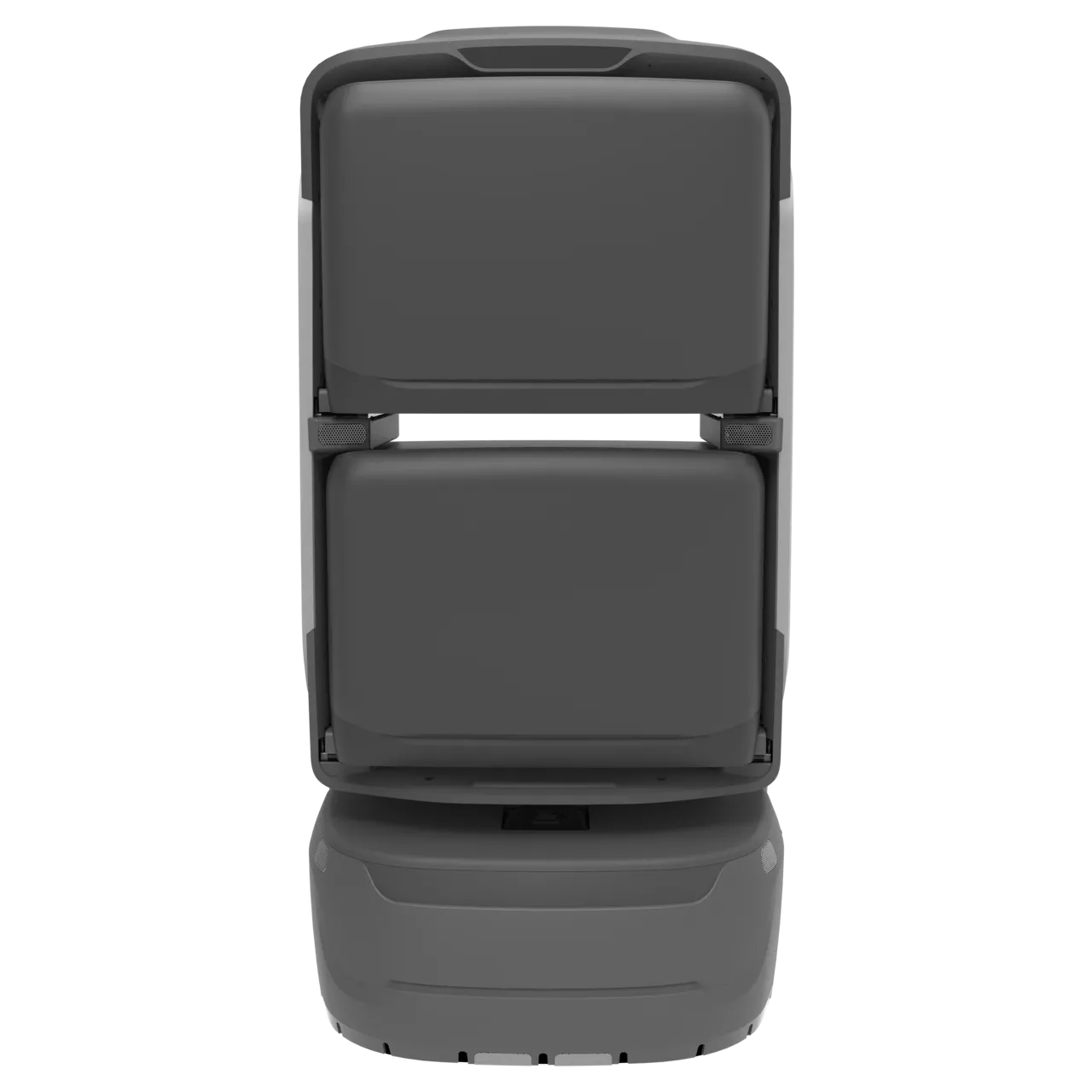
KAGO activity delivery robot

Related equipment

Review product information and reconcile the document version with the supplied model/configuration.

View product

Document configuration and device checks

Indoor delivery terminal
Transport, notify, replenish and return permitted items.
Roles
Social workers approve lists and receive; logistics prepares; caregivers guide and care for residents.

Document and current product versions may differ; confirm supplied specifications and project configuration.

Common questions

Where should the pilot start?

Start at one or two frequent activity locations; validate routes, frequency and handovers before adding care stations and floors.

How do robots and staff share work?

Dispatch and receiving staff:Request, prepare, load, verify and acknowledge receipt. Robot:Transport, notify and return status within the configured scope. Management and support:Maintain points, schedules, equipment, exception handling and records.

What needs separate confirmation?

Start with light, safe, easily loaded items. Exclude large speakers, heavy furniture, fragile ornaments, dangerous tools and loose liquids; collect only clean low-risk small items.

How are configuration and acceptance set?

Use source recommendations as a starting point, then confirm against site routes, supplied equipment and trial data. Suggested checks do not establish fixed performance or service guarantees.

Plan a project

Pilot preparation

Start at one or two frequent activity locations; validate routes, frequency and handovers before adding care stations and floors.

Discuss the solution
Scope and points
Store, Activity points, Support points Confirm accessible scope and responsible staff on site.
Routes and access
Maps, passages, doors/lifts, network and charging. Commission cross-floor and controlled-door access as needed; diagrams do not replace site tests.
Handover and exceptions
Dispatch and receiving staff, Robot, Management and support Agree notifications, staff takeover, records and review rules.

Choose a dedicated solution for each workflow.