TRANGO
Heavy-duty indoor and outdoor delivery
Heavy loads and multi-stop deliveries across buildings and campuses.
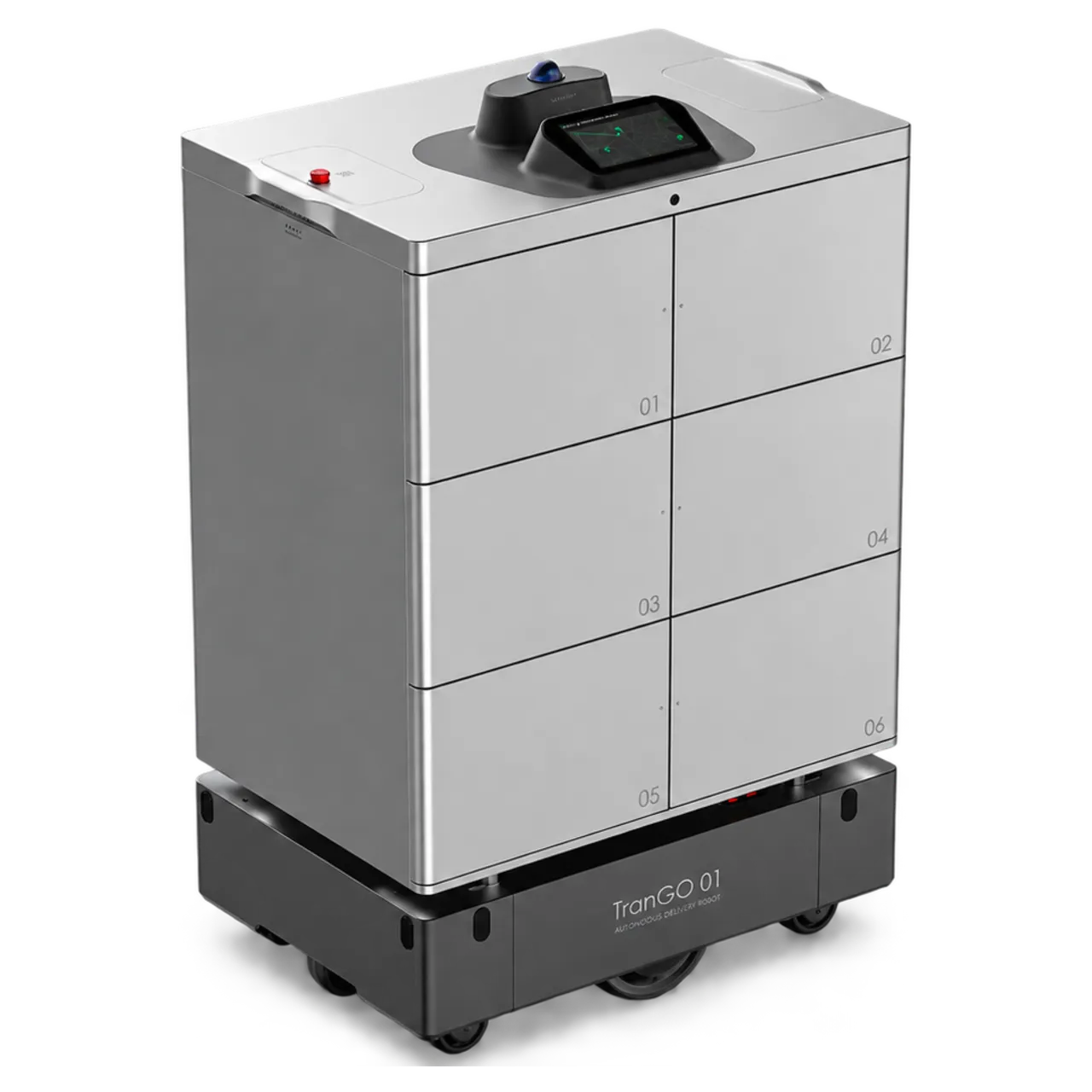
3D could not start. Check browser graphics acceleration and try again. The product image and specifications are still available.
3D is a visual approximation, not calibrated CAD. Arrow keys rotate, + / − zoom, Home resets.
- Maximum chassis payload
- 150 kg
- Range on a full charge
- 35 km
- Body width
- 604 mm
Separate by destination. Adapt to your cargo.
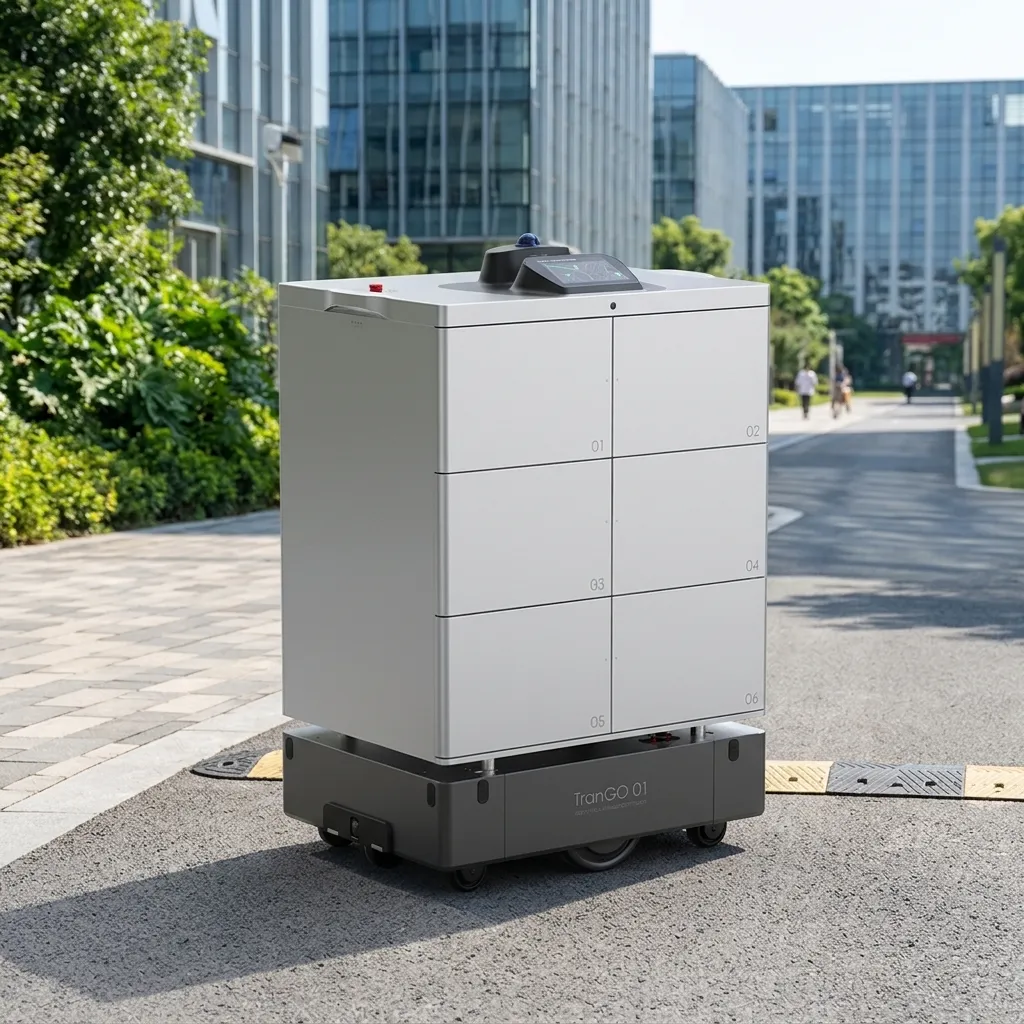
Six independent compartments in three rows and two columns separate cargo by destination. Other layouts are illustrative and require project-specific confirmation.
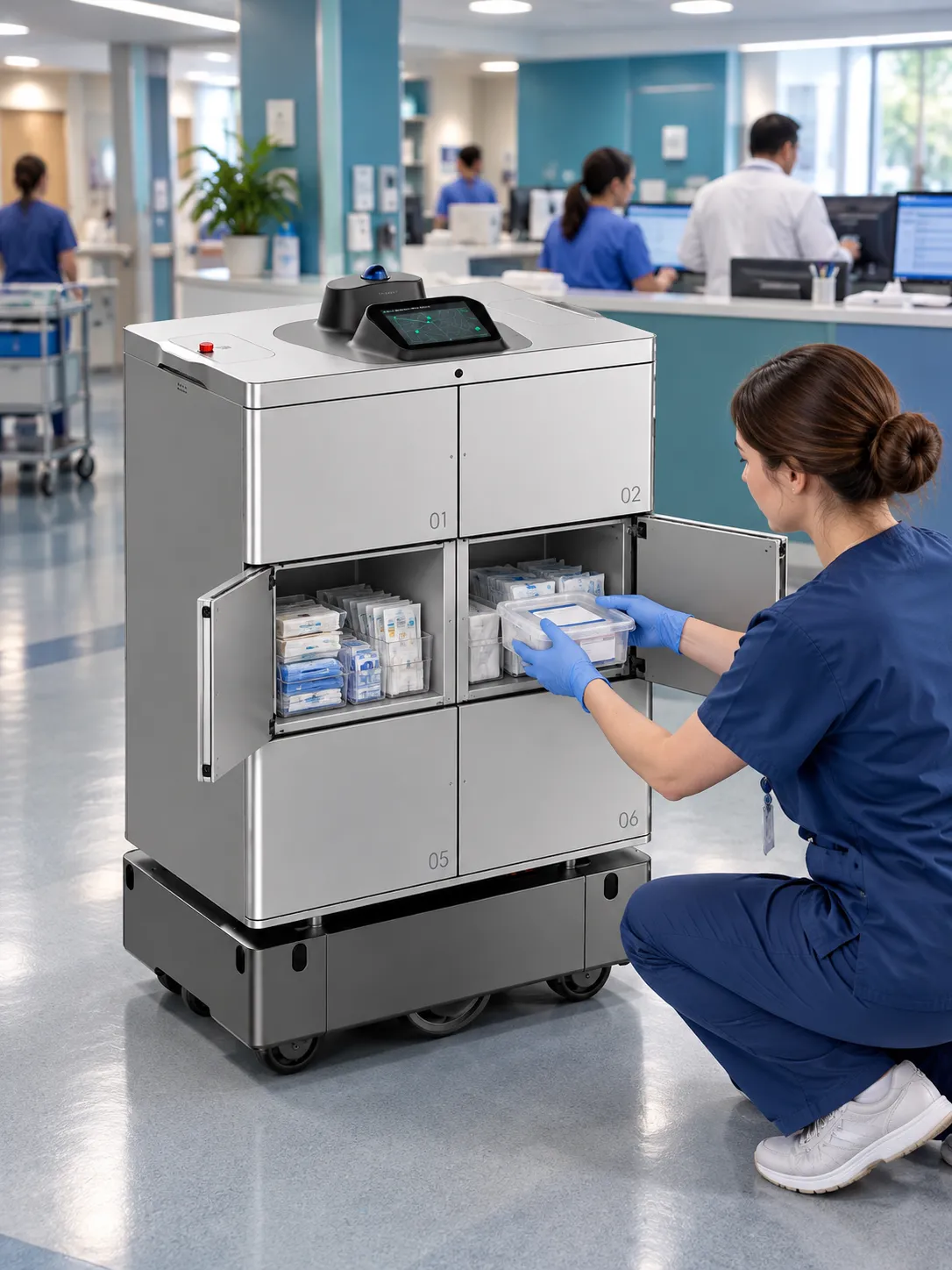
Six-wheel independent suspension for uneven roads.
Hydraulic springs and torsion bars absorb road vibration. Validate transport stability along the actual route with the intended cargo, load and travel speed.
- Challenging surfaces
- Documentation lists a 60 mm speed bump, a 25 mm vertical obstacle, a 100 mm gap and a maximum gradient of approximately 15%. Promotional material describes automatic slowdown on slopes; verify routes, load and configuration on site.
- Indoor and outdoor routes
- Six-wheel independent suspension combines with 3D/2D lidar, front and rear binocular depth cameras and GNSS positioning.
- Automotive-grade sheet metal & IP35 protection
- 304 stainless steel and galvanized steel combine with automotive-grade sheet-metal construction and high-temperature bake paint. IP35-rated dust and rain protection supports use across indoor and outdoor temperature zones.
Load. Travel. Verify. Collect.
Explore item delivery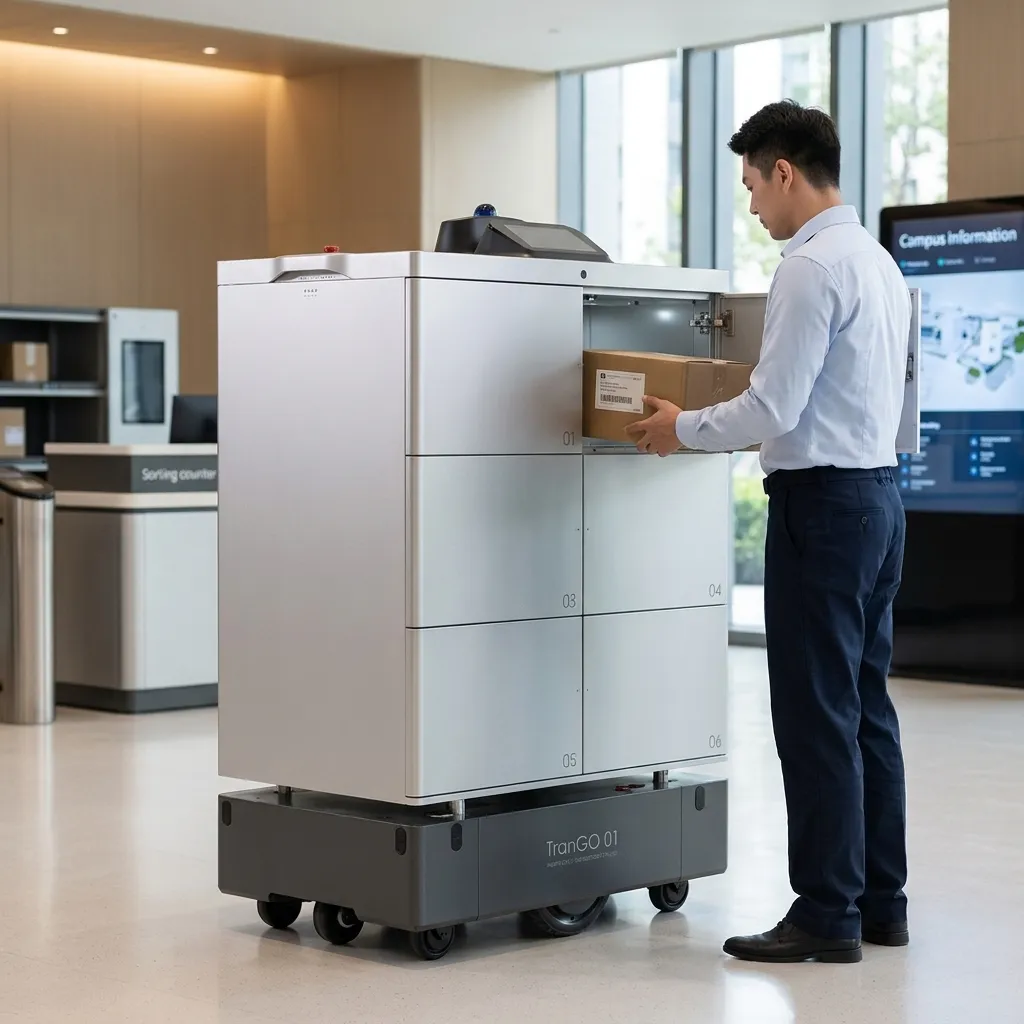
Load
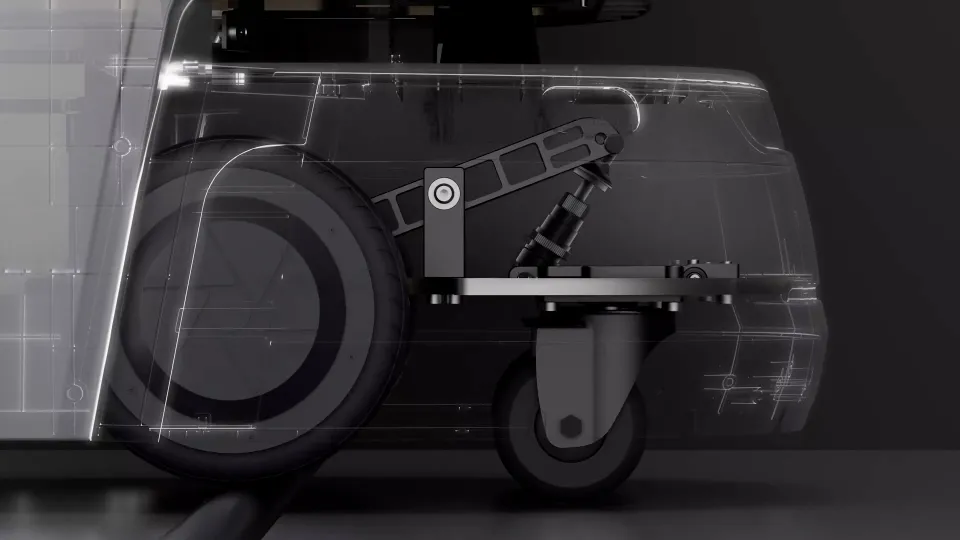
Load by destination, checking compartment loading limits and the 150 kg total chassis payload limit.
Transit
Follow the mapped route. Validate slopes, speed bumps and building access against the actual route and load.

Verify
Notify recipients on arrival at the handover point. They enter a passcode on the top touchscreen or tap a card to verify collection.

Collect & review
After verification, open the corresponding compartment to collect items. RFID compartment sensing and fisheye video help record and review the handover.
Service scenes are illustrative. Route capability, building IoT integration and authentication methods depend on site validation.
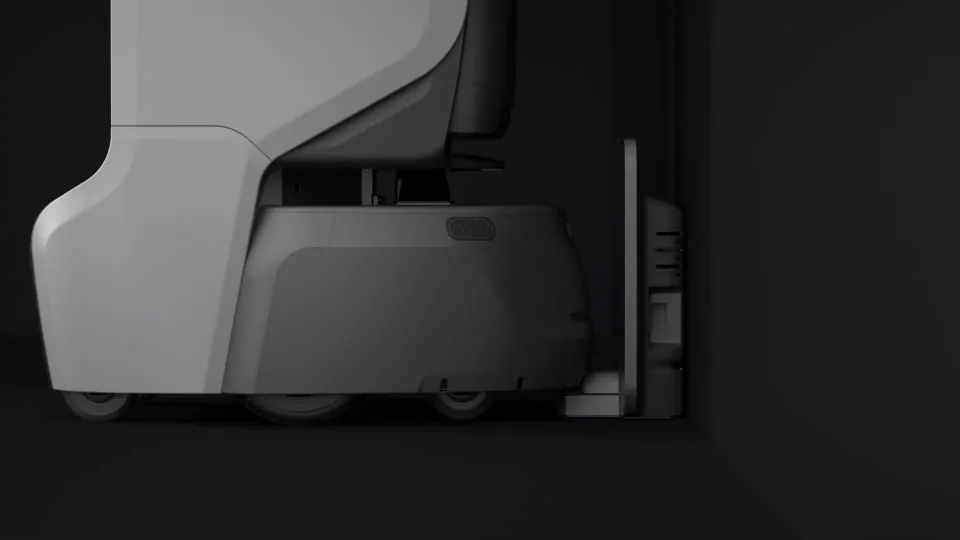
Recharge autonomously for the next journey.
High-capacity lithium battery packs and splash-resistant smart charging stations support frequent transport across large campuses.
- Range and charging
- The hardware specification lists a 35 km range on a full charge, 56 hours on standby and approximately 4 hours to charge from 20% to 98%. Actual operation varies with load, route and environment. A canopy is recommended for a permanent outdoor charging station.
- Fleet coordination
- A dispatch system can coordinate tasks and routes across multiple robots and show operating data.
Technical specifications
Chassis payload is not the payload per compartment.
Body and loading
- Dimensions · L × W × H
- 905 × 604 × 1380 mm
- Net weight
- 171.7 kg
- Maximum chassis payload
- 150 kg
- Compartment layout
- Hardware documentation shows 6 compartments in 3 rows × 2 columns; configuration depends on the delivered robot
- Suspension
- 6-wheel independent suspension; hydraulic springs and torsion bars, 600 lb capacity
- Body protection
- IP35; 304 stainless steel and galvanised sheet metal with baked coating
Movement and access
- Maximum speed
- 1.8 m/s
- Vertical obstacle clearance
- 25 mm
- Maximum gradient
- 8.5°
Perception and interaction
- Perception
- 3D/2D lidar, front/rear binocular depth cameras, four-system GNSS, fisheye camera and 8 ultrasonic sensors
- Handover authentication
- Passcode + card, RFID compartment sensing and fisheye video review
Battery and charging
- Battery capacity
- 47.45V 36Ah
- Range on a full charge
- 35 km
- Charging time · 20%–98%
- 4 h
- Charging station
- Splash-resistant station with sliding cover and drainage; 54.6 V / 7 A / 383 W
Plan for the site.
These guide dimensions are references for a site survey. Confirm clearances, configuration and route performance on site before deployment.
Straight & turning clearance
Charging clearances
Clearance diagrams, not a surveyed site plan. Verify turns, slopes, outdoor surfaces and docking on site.
- Floors and clearances
- Recommended clearance: at least 800 mm on straight routes and 1100 mm at turns. Reference vertical obstacle clearance is 25 mm; maximum gradient is approximately 8.5°. Assess water, surfaces and lighting changes along outdoor routes.
- Charging location
- Place against a level, solid wall with 2 m clear in front and 0.8 m on each side. Confirm power; add a canopy for a permanent outdoor installation.
- Lifts and access control
- Travel between floors and through controlled doors requires a site survey and project-specific lift, door or gate IoT integration. Confirm compatibility, installation conditions and property-management permission.
- Network and routes
- Check wireless coverage in working areas, lifts and charging locations. Map and configure routes, then test notifications, remote management and recovery from interruptions.
- Task acceptance and upkeep
- Assign compartments by destination and check loading limits. Test passcodes, cards and cargo-status records; commission slopes, travel between floors and handover points under load.
Explore delivery applications
Learn how item, food, and shop delivery services fit into your building operations.
Let TRANGO handle campus transport.
Use cargo volume, indoor and outdoor routes, and handover points to confirm compartment configuration, route conditions and charging locations.
Discuss your project