AIR
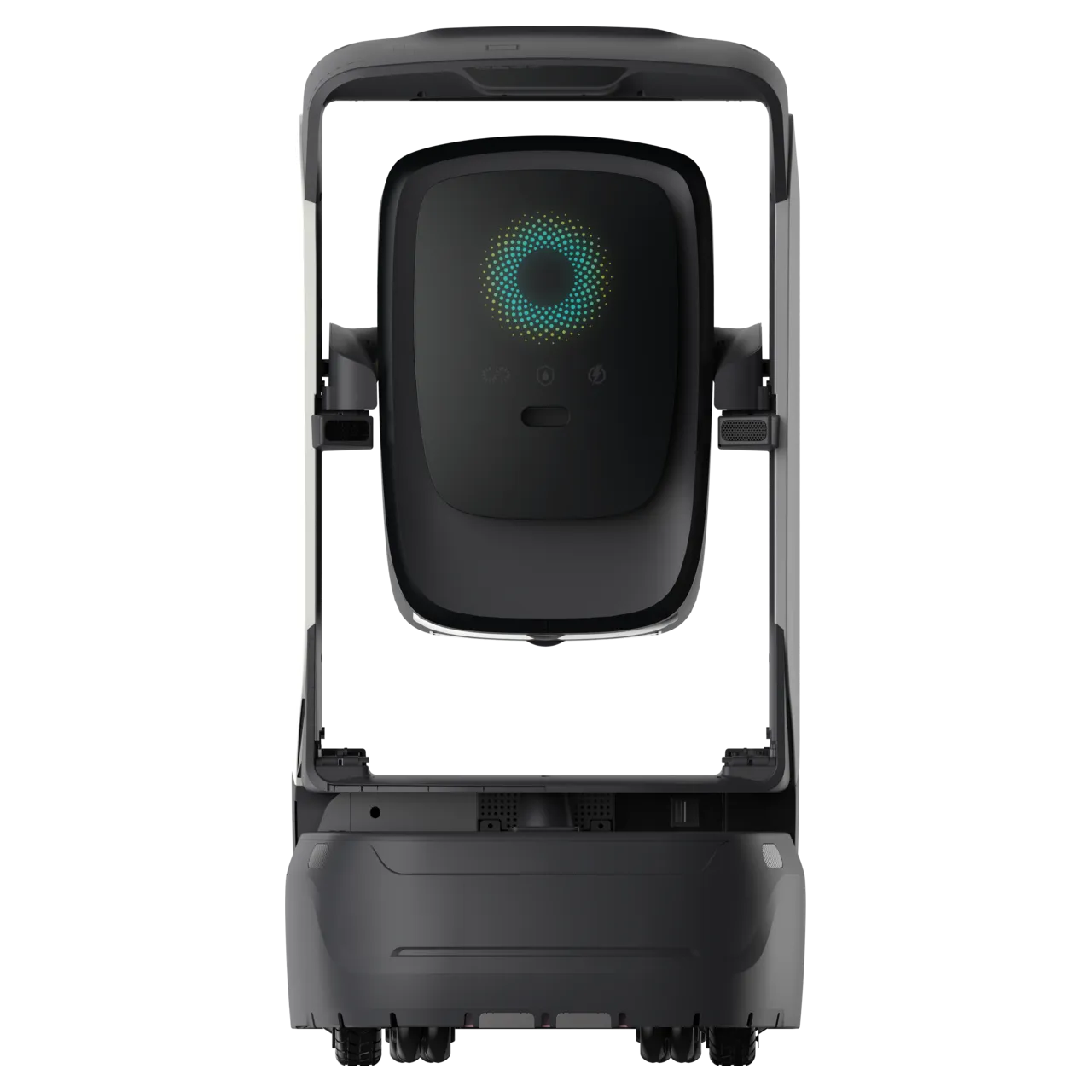
Air purification robot
Monitors and purifies indoor air along planned routes or at designated locations.
3D could not start. Check browser graphics acceleration and try again. The product image and specifications are still available.
3D is a visual approximation, not calibrated CAD. Arrow keys rotate, + / − zoom, Home resets.
- High-mode airflow · m³/h
- ≥420
- Normal-mode runtime
- 2.5–3 h
- Body width
- 472 mm
Purification that moves with the space.
An autonomous robot that monitors and purifies air as it moves through indoor spaces. It operates along planned routes or at designated locations, adjusting airflow based on air-quality readings or people detection.
Upper air outletLower air intakeThree airflow settings
- High≥420 m³/h
- Normal≥360 m³/h
- Quiet≥200 m³/h
- Composite filtration
- Pre-filter, HEPA/activated-carbon filter and nano-zinc coating.
- Purification components
- Plasma and negative-ion components, with a solid fragrance system.
- Air sensing
- Particle and TVOC sensors support mobile and fixed-point air monitoring.
Evaluate purification performance for the environment and test conditions. Components alone do not establish clinical disinfection effectiveness.
From a task to a working routine.
Explore air purificationSet the task
Configure routine working times and routes or points, or initiate an ad hoc task through the app.
Monitor the space
Move along a mapped route or monitor at a selected point. Travel between floors requires lift and access-control integration.
Respond as needed
Air or crowd recognition can trigger increased airflow and purification.
Continue working
Under configured conditions, AIR returns to its original route. When the battery is low, it can return to charge.
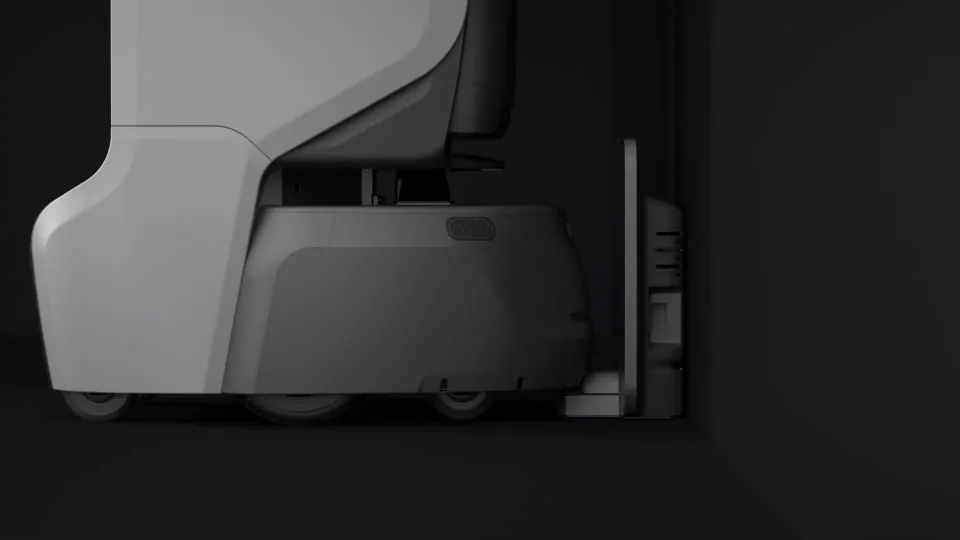
Ready for the next round.
Bring working times, charging and filter care into the daily routine.
- Working time
- Reference runtime is 2.5–3 hours in normal mode and 3.5–4 hours in energy-saving mode. Actual runtime varies with the task and environment.
- Automatic charging
- AIR can return to its charging station when the battery is low. Keep the docking route and charging area clear.
- Filter care
- Check the air intake, outlet and filters regularly. Plan filter checks and replacements for the environment and usage.
Technical specifications
AIR: normal mode 2.5–3 h; energy-saving mode 3.5–4 h. Purification component specifications do not establish clinical disinfection effectiveness; the conditions for the documented ozone concentration require confirmation.
Body and loading
- Dimensions · L × W × H
- 567 × 472 × 939 mm
- Net weight
- 47.5 kg
- Maximum chassis payload
- 60 kg
- Functional module
- Air purification module: 414.7 × 366.9 × 463 mm / 11.4 kg
Movement and access
- Maximum speed
- 2 m/s
- Vertical obstacle clearance
- 20 mm
- Maximum gradient
- 7°
- Operating environment
- 0–40 °C · 5%–85% relative humidity · no airborne dust or corrosive gases
Perception and interaction
- Perception
- Particle and TVOC sensors, front 1080P camera
Air purification
- Airflow
- High ≥420 m³/h · normal ≥360 m³/h · quiet ≥200 m³/h
- Filtration
- Pre-filter, HEPA/activated-carbon filter and nano-zinc antibacterial coating
- Purification components
- Plasma field: 3 × 10¹⁶/m³; negative ions: 1.2 × 10⁸/m³
- Ozone concentration · documented value
- ≤0.003 mg/m³
- Fragrance
- Solid fragrance system
- Service station compatibility
- STATION 3.0 and later are mentioned in the documentation; confirm compatibility for the delivered version
Battery and charging
- Battery capacity
- 47.45V 9Ah
- Reference runtime
- Normal: 2.5–3 h / energy-saving: 3.5–4 h
- Charging station
- 124.4 × 277.6 × 308.6 mm / approximately 191 W
Plan for the site.
These guide dimensions are references for a site survey. Confirm clearances, configuration and route performance on site before deployment.
- Floors and clearances
- Level, hard indoor flooring; recommended straight-route clearance of at least 650 mm, thresholds below 20 mm and slopes no steeper than 7°. Verify turning space for the chosen model and route on site.
- Charging location
- Place against a level, solid wall with 1.5 m clear in front and 0.5 m on each side. Confirm power and keep clear of water, stairs and entrances.
- Lifts and access control
- Travel between floors and through controlled doors requires a site survey and project-specific lift, door or gate IoT integration. Confirm compatibility, installation conditions and property-management permission.
- Network and routes
- Check wireless coverage in working areas, lifts and charging locations. Map and configure routes, then test notifications, remote management and recovery from interruptions.
- Task acceptance and upkeep
- Choose air-sensing or crowd-sensing mode, stopping positions and airflow by area. Keep air inlets and outlets clear and agree filter inspection, replacement and routine maintenance.
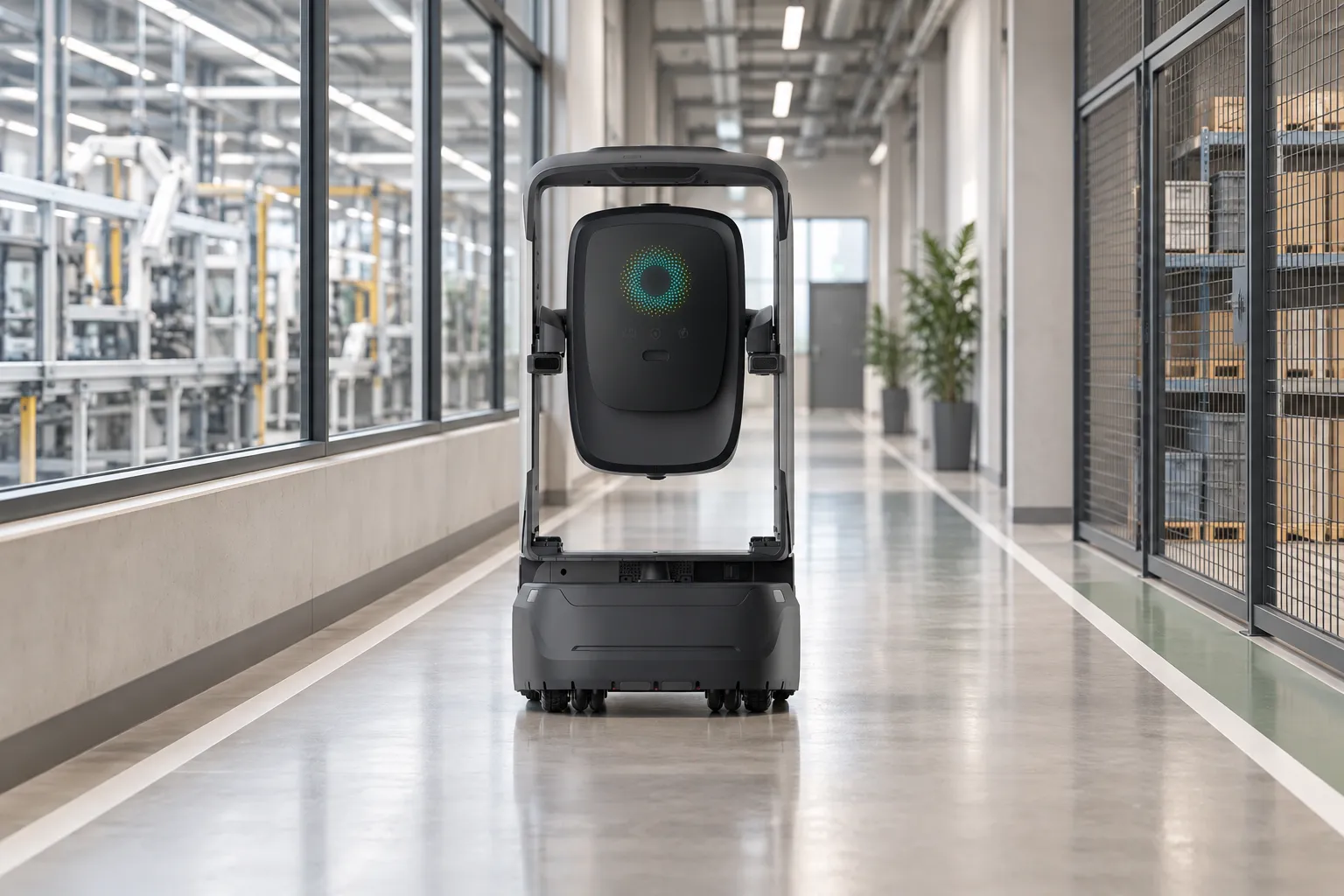
Select an air purification solution tailored to your space.
Explore targeted mobile inspection and purification solutions tailored to the air quality requirements of each area.
Explore air purificationFind AIR’s place in your building.
Start with the service areas, working times and routes. Confirm airflow, charging locations and a filter-maintenance plan for your project.
Discuss your project