On-demand
Nurse stations request additional supplies.
Hospital ward replenishment solution
Replenish care consumables, daily items and small linen loads between central stores, ward stores, nurse stations and treatment rooms.
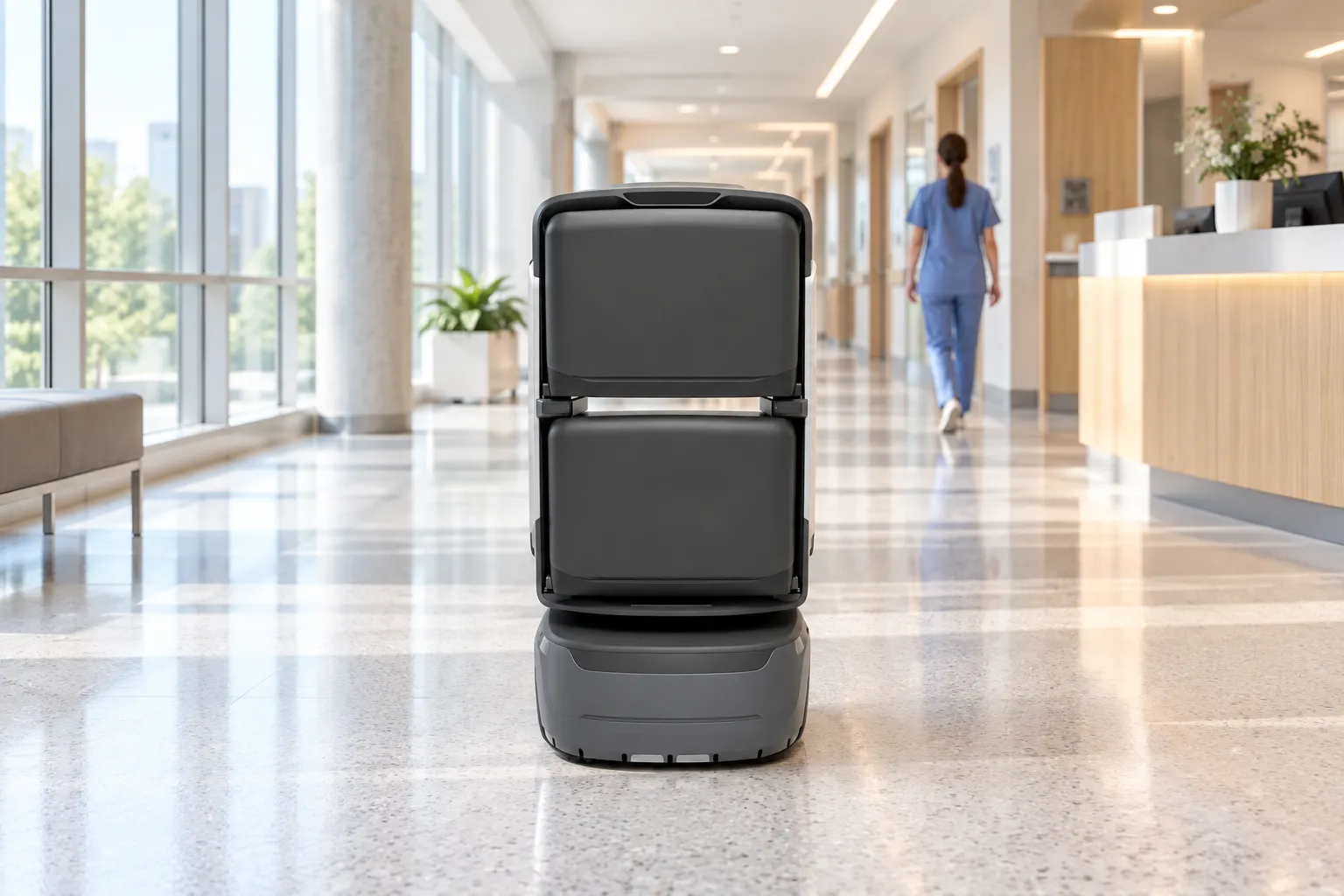
Request
Select items, destination and required time.
Deliver
Follow configured routes and access rules.
Handover
Receive the arrival alert, use configured access and verify receipt.
Pilot the documented workflow with responsible staff verifying key handovers.
The service
Robots execute configured tasks; responsible staff retain verification and on-site response.
Users
Select items, destination and required time.
Dispatch staff
Check items, packaging and compartments; load manually and confirm.
Robot
Follow configured routes and access rules.
Recipients
Receive the arrival alert, use configured access and verify receipt.
Managers
Review completion, exceptions and handover records.
Confirm execution separately from human handover/review; assigned staff take over exceptions.
Request, prepare, load, verify and acknowledge receipt.
Transport, notify and return status within the configured scope.
Maintain points, schedules, equipment, exception handling and records.
Select modes for the workflow; agree extensions separately.
Nurse stations request additional supplies.
Plan around ward consumption and shifts.
Station robots indoors and configure cross-building store batches as needed.
Choose TRANGO for cross-building batches and KAGO for indoor runs, with manual transfers when needed. Automatic docking transfer, disinfection and stock decisions are not included.
Document-based scope; confirm supplied model, options and site fit.
Configure TRANGO/KAGO for routes, batches and compartments.
Task monitoring, arrival/receipt, exceptions and statistics; assess APIs separately.
Suitability
Replenish care consumables, daily items and small linen loads between central stores, ward stores, nurse stations and treatment rooms.
Nurse stations request additional supplies.
Plan around ward consumption and shifts.
Station robots indoors and configure cross-building store batches as needed.
Reduce repeated trips around these tasks and define on-site handovers.
| Service area | Service scope |
|---|---|
| On-demand | Nurse stations request additional supplies. |
| Scheduled | Plan around ward consumption and shifts. |
| Stationed / bulk | Station robots indoors and configure cross-building store batches as needed. |
Assign suitable repeated routes to robots and compare results in the pilot.
Verify outcomes against task, destination and responsible role.
Use task states and exception records to adjust routes, schedules and configuration.
Building route
Configure routes for the actual site; diagrams explain the workflow.
Prepare, count and load.
Check, receive and restock.
Define receipt, charging and safe waiting.
Central store → Ward store / nurse station → Treatment / support
Diagrams explain the flow; survey actual passages, thresholds, access and stops.
Confirm site, equipment and staffing; verify interfaces per project.
Locations, devices, maps, IoT list, training and acceptance records.
Survey 3–5 days, IoT 1–2 weeks, deployment one week, testing and trial 1–2 weeks each, subject to readiness.
Commission configured interfaces, notifications and access; assign site contacts and staff fallback.
Swipe horizontally to see all columns.
| Item | Scope | Confirmation |
|---|---|---|
| Scope and points | Central store, Ward store / nurse station, Treatment / support | Confirm accessible scope and responsible staff on site. |
| Routes and access | Maps, passages, doors/lifts, network and charging. | Commission cross-floor and controlled-door access as needed; diagrams do not replace site tests. |
| Handover and exceptions | Dispatch and receiving staff, Robot, Management and support | Agree notifications, staff takeover, records and review rules. |
Fleet planning
Start with one ward, one floor and three to five points. One TRANGO plus two or three KAGO units is a source reference for one store/building, not a bed-based sizing rule.
Configure TRANGO/KAGO for routes, batches and compartments.
Task monitoring, arrival/receipt, exceptions and statistics; assess APIs separately.
| Sizing variable | Effect on capacity |
|---|---|
| Task cycle | Measure request, execution, handover, return and charging time. |
| Site scope | Central store, Ward store / nurse station, Treatment / support |
| Staff coordination | Allow for available receiving, reviewing and exception-response staff. |
Source configurations/data refer to their stated scenario; confirm final sizing through site validation.
Pilot & operation
The following are project assessment and acceptance suggestions, subject to site confirmation.
Site preparation
Start with one ward, one floor and three to five points. One TRANGO plus two or three KAGO units is a source reference for one store/building, not a bed-based sizing rule.
Once prerequisites are ready
Check devices, routes, points, accounts and necessary access/system interfaces.
As agreed for the project
Validate real tasks, staff coordination, exceptions and records before expansion.
The following are project assessment and acceptance suggestions, subject to site confirmation.
Swipe horizontally to see all columns.
| Condition | Action | Ownership and records |
|---|---|---|
| Task cannot continue | Pause, wait or hand over to staff under site rules. | Managers record cause, owner and recovery conditions. |
| Handover/review incomplete | Contact the assigned staff; automatic task closure does not replace their confirmation. | Record the reason and follow-up. |
| Device/access exception | Follow support procedures and use staff service if required. | Support and site staff coordinate and validate recovery. |
The following are project assessment and acceptance suggestions, subject to site confirmation.
Swipe horizontally to see all columns.
| Check | Status | Verification |
|---|---|---|
| Task execution | Suggested acceptance item | Complete tasks within agreed routes/scope and record success, failure and reasons. |
| Staff coordination | Suggested acceptance item | Verify notification, permissions, human review/handover and exception takeover. |
| Operational records | Suggested acceptance item | Sample tasks, times, points and outcomes; agree metrics and targets with the project team. |
Choose TRANGO for cross-building batches and KAGO for indoor runs, with manual transfers when needed. Automatic docking transfer, disinfection and stock decisions are not included.
Dispatch and receiving staff, Robot, Management and support
Agree device models, options, interfaces, timing and targets in project documents.
Questions
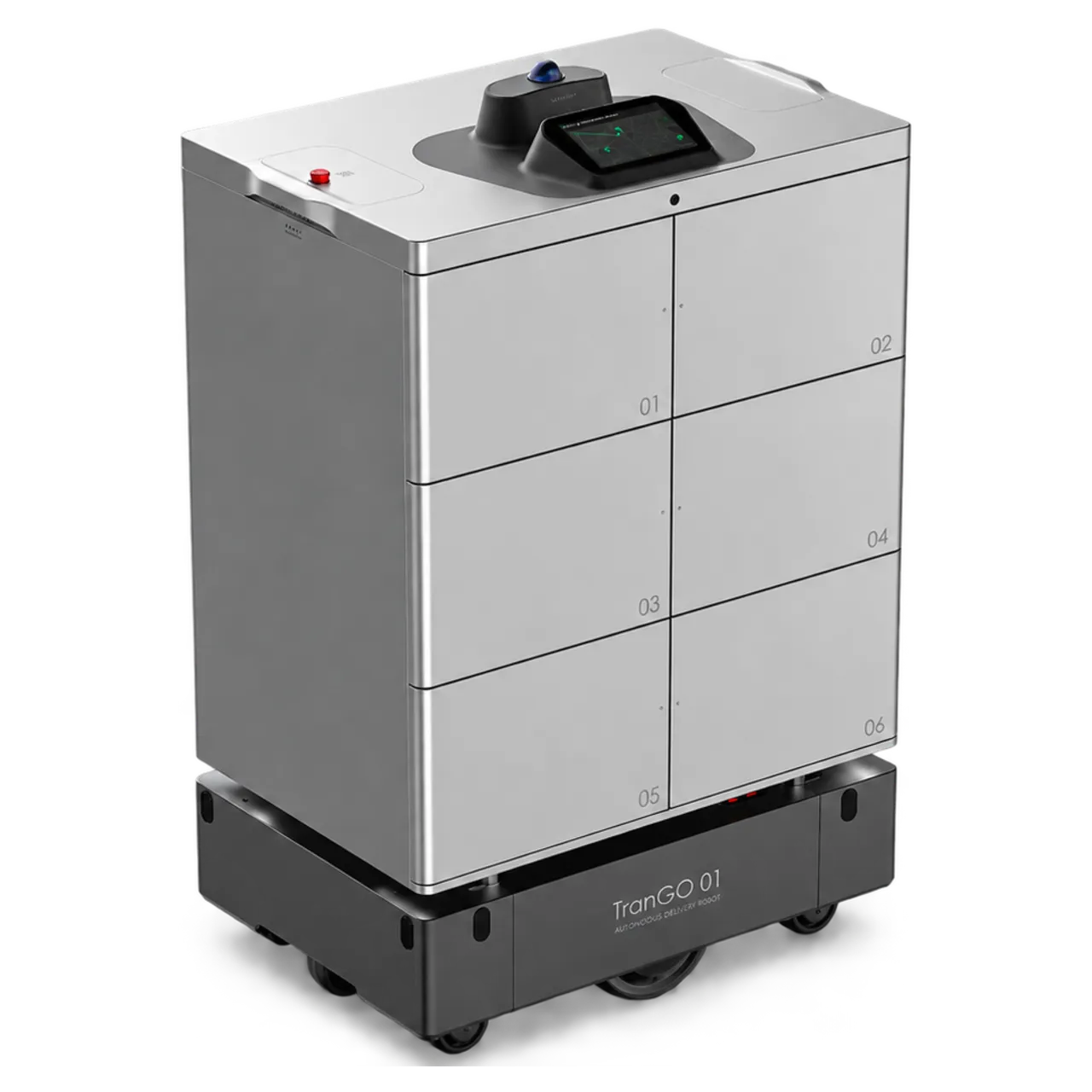
Review product information and reconcile the document version with the supplied model/configuration.
View productDocument and current product versions may differ; confirm supplied specifications and project configuration.
Start with one ward, one floor and three to five points. One TRANGO plus two or three KAGO units is a source reference for one store/building, not a bed-based sizing rule.
Dispatch and receiving staff:Request, prepare, load, verify and acknowledge receipt. Robot:Transport, notify and return status within the configured scope. Management and support:Maintain points, schedules, equipment, exception handling and records.
Choose TRANGO for cross-building batches and KAGO for indoor runs, with manual transfers when needed. Automatic docking transfer, disinfection and stock decisions are not included.
Use source recommendations as a starting point, then confirm against site routes, supplied equipment and trial data. Suggested checks do not establish fixed performance or service guarantees.
Plan a project
Start with one ward, one floor and three to five points. One TRANGO plus two or three KAGO units is a source reference for one store/building, not a bed-based sizing rule.
Discuss the solutionChoose a dedicated solution for each workflow.
Support one-to-many medication, many-to-one specimens and one-to-one sterilized tools/reports, sharing capacity by time while hospital staff verify handovers.
KAGO delivers hospital-approved voice/screen reminders at configured ward points through scheduled, circulating, ad hoc and stationed service.
Support hospital security through scheduled/ad hoc indoor rounds, live views, remote voice, checkpoint photos and event records.